Deodorant ingredients explained: aluminum-free vs. natural vs. clinical strength
Three products. Same shelf. Completely different chemistry. Most men pick deodorant by scent or habit — the ones who never have odor problems pick it by ingredients.
Quick answer
Deodorant ingredients fall into three jobs: odor neutralizers (zinc ricinoleate, magnesium hydroxide, baking soda), moisture absorbers (arrowroot, activated charcoal), and sweat blockers (aluminum — antiperspirant only). The right formula depends on whether your goal is odor control, sweat reduction, or both.
01 — first, the three product types
Deodorant, antiperspirant, and clinical strength
| Product type | Controls odor | Reduces sweat | Contains aluminum |
|---|---|---|---|
| Deodorant / aluminum-free / natural | Yes | No | No |
| Standard antiperspirant | Yes | Yes (~10–12%) | Yes |
| Clinical strength antiperspirant | Yes | Strong (~20%) | Higher |
02 — the ingredient everyone asks about
Aluminum: how it works, and what the science actually says
How it works
Aluminum salts dissolve in sweat and form a temporary gel plug in the sweat duct. This physically reduces how much sweat reaches the skin surface. The plug breaks down in 24–48 hours, which is why daily application is needed.
Is it safe?
Based on current scientific consensus: yes. The American Cancer Society and Mayo Clinic have found no proven link between aluminum in antiperspirant and cancer or Alzheimer's disease. Localized skin irritation — redness, itching after shaving — is the most common issue, not a systemic risk.
Bottom line
If you need sweat reduction, aluminum-based antiperspirant is the only clinically validated OTC option. If odor control is your only goal, aluminum-free handles it without the ingredient.
03 — what each ingredient actually does
Aluminum-free deodorant ingredients, one by one
Tap through each active ingredient to see what it does and where it fits.
Zinc ricinoleate
A zinc salt derived from castor oil. Traps and neutralizes odor molecules before they reach your nose — it acts on the smell compounds directly, not the bacteria.
Magnesium hydroxide
Raises the skin's pH to a level where odor-causing bacteria struggle to survive. Gentler than baking soda because it's less soluble in sweat and raises pH more gradually.
Baking soda (sodium bicarbonate)
Creates an alkaline environment that kills odor-producing bacteria. Effective — often very effective. But it's the most common cause of irritation in natural deodorants.
Arrowroot powder & activated charcoal
Moisture absorbers, not odor neutralizers. Arrowroot keeps underarms feeling dry by absorbing surface sweat. Activated charcoal goes further, adsorbing odor molecules as well.
Fragrance (synthetic or natural)
Masks odor. That's all. A formula that lists fragrance as its only active ingredient is a masking product, not a deodorant — it works for 1–2 hours at best.
All ingredients at a glance
| Ingredient | What it does | Skin tolerance | Works alone? |
|---|---|---|---|
| Zinc ricinoleate | Captures odor molecules | Excellent | Partially |
| Magnesium hydroxide | Inhibits bacteria via pH shift | Very good (sensitive skin) | Partially |
| Baking soda | Alkaline environment kills bacteria | Poor for sensitive skin (15–30% irritation) | Yes, with risk |
| Arrowroot powder | Absorbs surface moisture | Excellent | No |
| Activated charcoal | Absorbs odor + moisture | Good | Partially |
| Fragrance only | Masks odor temporarily | Variable (common allergen) | No |
| Aluminum (standard ~10–12%) | Plugs sweat ducts | Generally good | Yes |
| Aluminum (clinical ~20%) | Plugs sweat ducts, stronger | May irritate sensitive skin | Yes |
04 — read the label like a pro
How to read a deodorant label in 30 seconds
The name, packaging, and scent don't tell you if a formula works. The ingredient list does.
- Zinc ricinoleate or zinc oxide — effective odor neutralizer, gentle on skin
- Magnesium hydroxide — best option for sensitive or baking-soda-reactive skin
- Arrowroot or activated charcoal — moisture absorption support
- Aluminum zirconium or aluminum chloride — if you need sweat reduction
- Fragrance listed as the only active — it's a masking product, not a deodorant
- Baking soda listed first or second — high irritation risk for many men
- No zinc, magnesium, or aluminum anywhere — unlikely to perform under real conditions
- Alcohol listed high — dries and irritates skin, especially post-shave
05 — aluminum-free since 1974
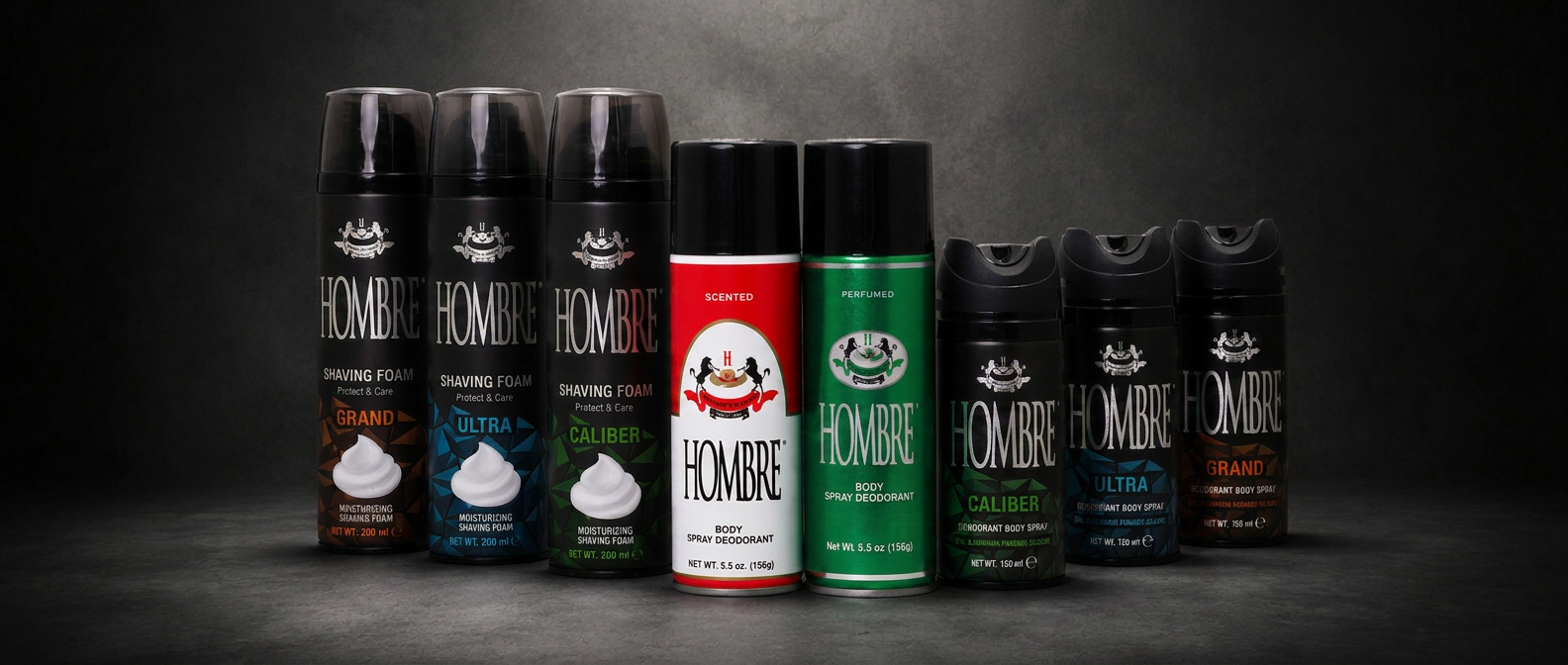
Three spray formulas, ingredients that actually work
No aluminum. No parabens. Cruelty-free. Made in Miami.

- Aluminum-free, paraben-free formula
- Spray delivery, low residue
- All-day odor control

- Aluminum-free, paraben-free formula
- Spray delivery, low residue
- All-day odor control

- Aluminum-free, paraben-free formula
- Spray delivery, low residue
- All-day odor control
Ships to the US, Colombia, Mexico, and Panama.
06 — frequently asked
Questions men actually ask
The main active ingredients are zinc ricinoleate, magnesium hydroxide, and baking soda — all odor neutralizers but with different mechanisms. Supporting ingredients include arrowroot or activated charcoal for moisture absorption. None of these stop sweating; they control odor without blocking sweat glands.
Based on current scientific consensus: no. The American Cancer Society and Mayo Clinic have found no proven link to cancer or Alzheimer's disease. Aluminum can cause localized skin irritation in some people, particularly post-shave, but no systemic health risk has been established.
Baking soda (pH 8–9) disrupts the skin's naturally acidic pH (4.5–5.5), damaging its protective acid mantle. This causes contact dermatitis in an estimated 15–30% of users. Fix: switch to a magnesium hydroxide or zinc-based formula labeled "baking soda-free."
Functionally, very little. All deodorants are technically aluminum-free — aluminum is only in antiperspirants. "Natural" signals plant-based or minimally processed ingredients. "Aluminum-free" simply confirms no aluminum. The distinction is more marketing than chemistry.
Look for magnesium hydroxide or zinc ricinoleate as the primary active, arrowroot for moisture, no baking soda, low fragrance concentration, and no alcohol. Spray format helps too — it avoids friction on reactive skin and leaves less buildup than stick.
The ingredient list is the only honest thing on the label.
Match the active ingredients to your actual goal — odor control, sweat reduction, or sensitive skin — and stop buying the wrong product.
Shop HOMBRE® on Amazon →